



Inside the positioning of Rosewood AMAALA, a Saudi Riviera of Renewal
Regenerative hospitality is often discussed in terms of the net-positive impact a hotel creates for the place it inhabits. At AMAALA, that commitment was already a baseline for every property.
Set between the rocky Hijazi mountains and the shoreline of the Red Sea, AMAALA is a luxury hospitality destination rooted in transformative wellness and regenerative design. Developed as part of Saudi Arabia’s Vision 2030, the destination’s first phase encompasses nine* luxury resorts, alongside the AMAALA Yacht Club and Corallium Marine Life Institute, which brings research, conservation, and education together.
Within this broader destination, our work focused specifically on Rosewood AMAALA. We began with a different question: How could regeneration also shape the guest experience, and what could the environment itself teach us about renewal?
How could regeneration also shape the guest experience, and what could the environment itself teach us about renewal?
Answering that question meant developing a property positioning that both gave Rosewood a distinct perspective within the destination’s shared promise and served as a strategic lens across the resort: informing communications, including website copy and staff onboarding materials; shaping resort experiences, particularly signature daily rituals and programming at Asaya Spa; and guiding creative expression, from photography direction to artist collaborations and local partnerships.
While some neighboring resorts approached wellness through optimization, diagnostics, and performance, others leaned toward holistic practice, social wellness, or introspective retreat. Rosewood’s opportunity was to offer something different: wellbeing informed by the intelligence of place. Guided by Rosewood’s A Sense of Place™ philosophy, we looked beyond the wellness category and toward the setting itself, exploring what the Red Sea could teach us about renewal.
The Red Sea is an environment of extremes. High evaporation, negligible rainfall, and no river runoff make it one of the most saline ocean basins in the world. Yet these conditions have not produced a barren sea. Instead, they support a rich and highly particular network of coral reefs, seagrass meadows, mangroves, and marine life.
Its corals offer one of the most striking examples. In the Gulf of Aqaba, at the northern edge of the Red Sea, researchers have documented coral populations capable of tolerating temperatures several degrees above their local summer maximum before bleaching—an unusual margin that has led scientists to study the region as a possible thermal refuge. Their resilience is not invulnerability, nor does it lessen the urgency of climate change. But it does reveal a living system with an extraordinary capacity to regulate, adapt, repair, and continue through recurring cycles of regeneration.
Along the arid coastline, mangroves persist with almost no freshwater or soil input, while seagrass meadows create vital habitats for fish, crustaceans, and dugongs, a globally vulnerable marine mammal found in the Red Sea. Together, these coastal ecosystems also capture and store blue carbon in their sediments while supporting biodiversity and coastal stability. Across the sea, life persists through reciprocal relationships, continual restoration, and a fierce capacity to adapt. These systems do more than survive scarcity; they continue to flourish, turning resilience into abundance.
This became the beginning of our positioning: a definition of wellbeing rooted in our own capacity to renew and thrive, even under pressure.
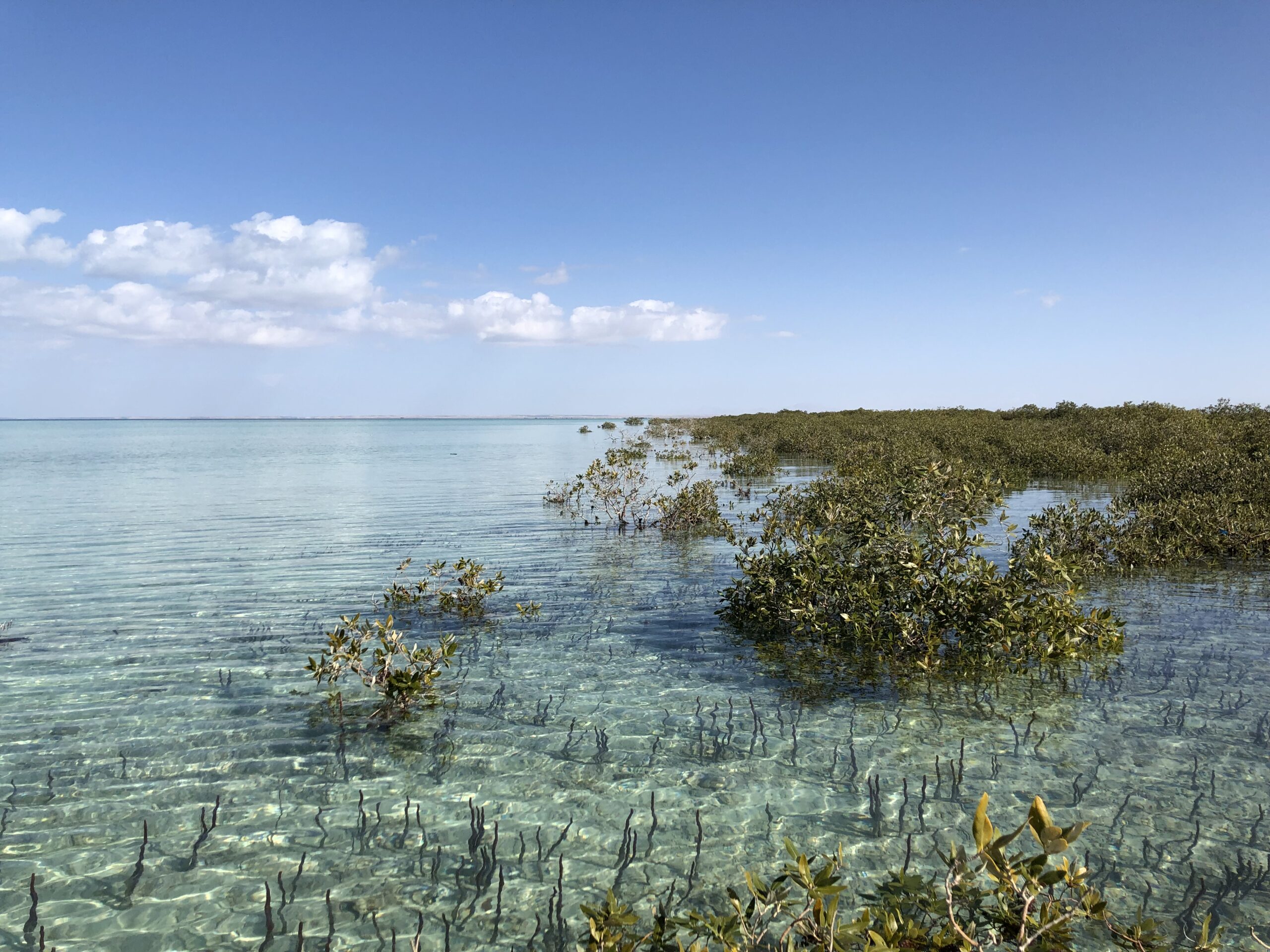
As we moved from research into strategy, the science of the Red Sea offered five vital systems through which to organize the experience. These were not presented as medical claims or direct parallels between the ecosystem and the human body. But they became a lens: a way to translate the intelligence of place into something guests could intuitively feel.
Circulation.The movement of ocean currents became a cue for meditative walks, functional movement, and pathways that keep the body in gentle motion.
Respiration. The exchange of oxygen inspired breathwork, outdoor ritual, and garden workshops connected to living systems and natural rhythm.
Regulation. The sea’s ability to hold balance under extreme conditions informed somatic practice, mindfulness, and experiences designed to help guests return to self.
Repair. The continual recovery of reef systems shaped restorative treatments, healing rituals and nourishing cuisine to replenish what has been spent.
Symbiosis. The mutual dependence of marine ecosystems found expression in communal dining, art, music, and experiences that restore through connection as much as solitude.
Together, these systems moved regeneration beyond a sustainability claim and gave the resort an ethos of its own: informed by marine ecology and translated into a practiced philosophy in which wellbeing is a state continually renewed.
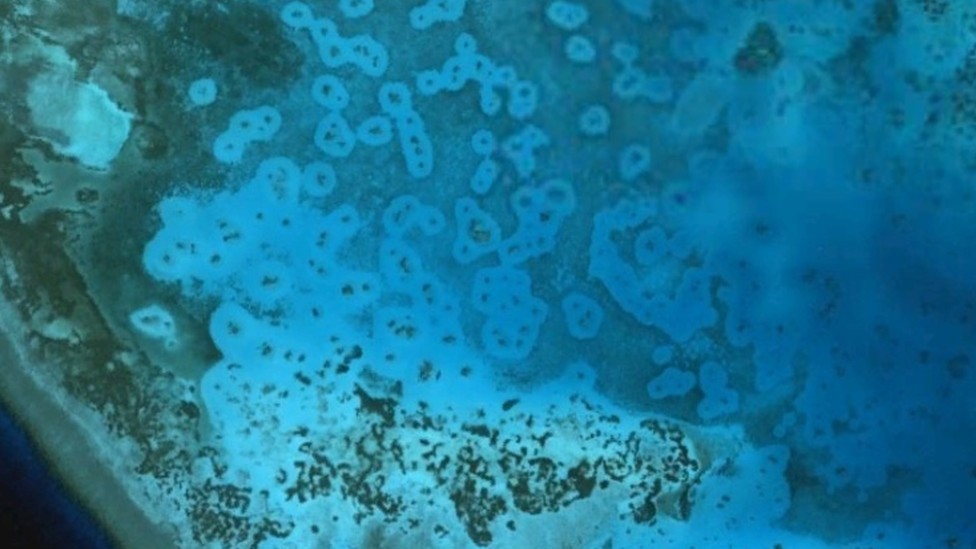
One of the most tangible translations began with a pattern drawn from the sea itself. Around many coral reefs, grazing fish and other marine life create pale rings of cleared sand known as reef halos. Formed through multispecies interactions, these halos are studied as potential indicators of reef health and function, offering clues about predator-prey relationships, marine reserve maturity, sedimentary carbon storage, and the wider reef ecosystem.
At Rosewood AMAALA, the halo became more than a visual reference. Its circular form appears throughout the resort: in lookout points, wellness alcoves, meditative gardens, circulation pools, and observatory structures. With a protective edge and an open center, these spaces evoke a state of regulation, inviting guests to pause within the landscape, recalibrate with the elements, and return to themselves.

The halo is one visible expression of this thinking, but the regenerative framework also shapes the rhythm of experience across the resort. At Asaya, renewal is neither confined to a treatment room nor prescribed as a linear program. It moves between bodywork and breathwork, ecology walks and calligraphy, Sadu weaving and botanical infusions, creating a dynamic approach to wellbeing where mind, body, and soul are enriched through movement, creativity, connection, and rest.
Across the resort, that rhythm finds its clearest expression in Sukūn Hour. Named for the Arabic word for stillness, the daily ritual pauses the resort as the light turns, marking the transition from day to evening. Held in a different place each day, the experience can take shape as a Saudi coffee ritual at Wadi Library, breathwork beneath the observatory halos, or an energy-cleanse along the beachfront. Each expression creates a shared moment of stillness, inviting guests to gather, recalibrate, and move into the evening with greater clarity and vitality.
Together, these experiences make renewal cyclical rather than finite, paced by a daily rhythm that flows between movement, exchange, connection, regulation, and rest. Without treating personal and ecological outcomes as equivalent, the experience carries a net-positive ambition of its own: to leave guests not merely restored to baseline, but with an expanded capacity for what comes next.
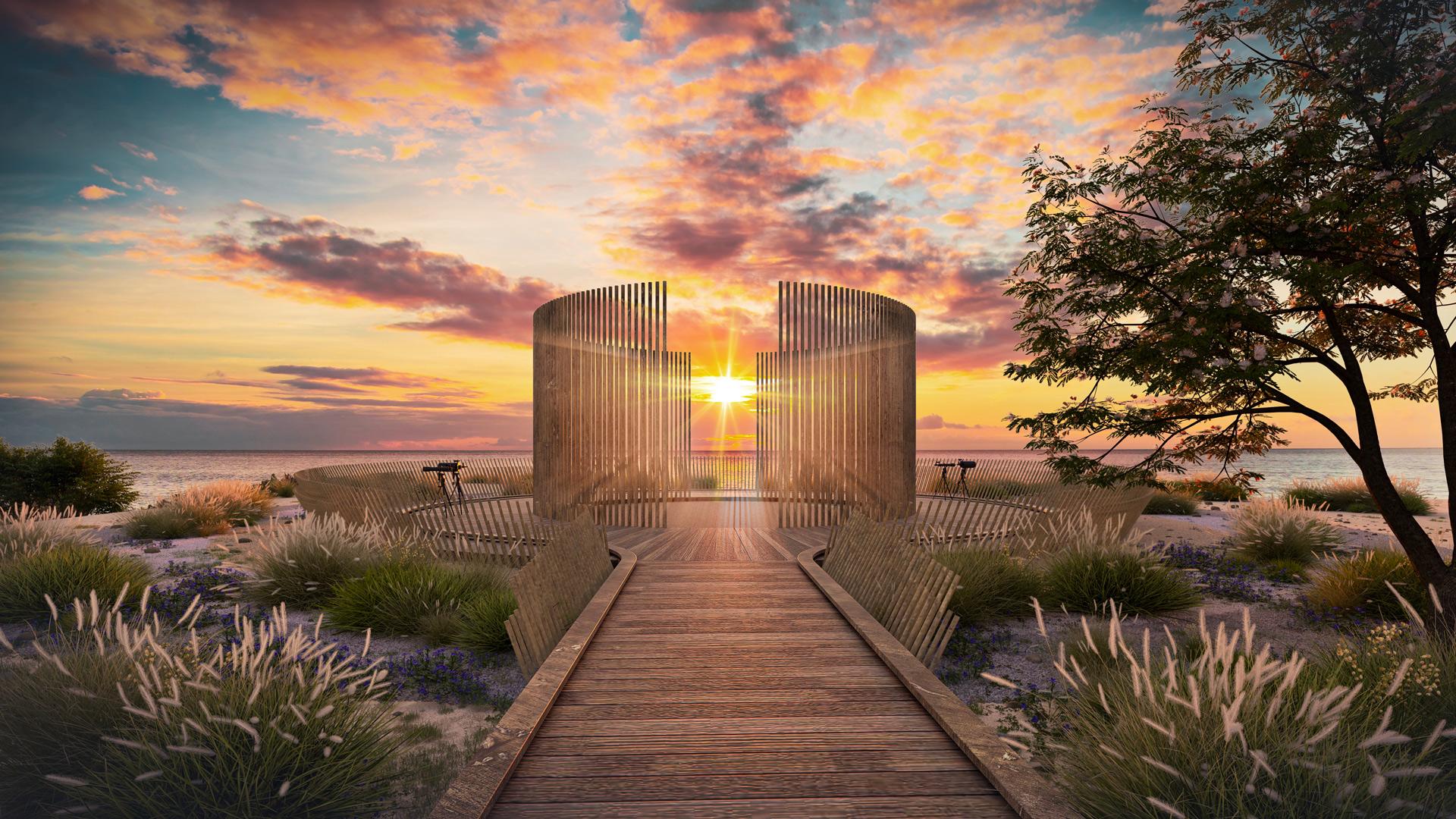
These ideas ultimately helped shape Rosewood AMAALA as a Saudi Riviera of Renewal: a coastal experience guided by the restorative rhythm of the Red Sea and enriched by Arabian ritual and artistry. Renewal here is not positioned as a dramatic transformation or a set of metrics to achieve. It is woven into the day itself, through movement and stillness, connection and solitude, nature and creativity, with the expansive sea as an ever-present reminder of our innate ability to renew.
At its most powerful, science can do more than substantiate environmental commitments; it can reveal an intelligence already embedded in place. The role of brand is to translate that intelligence without flattening it into metaphor–to create a coherent story, meaningful guest experiences, and a rhythm guests can feel. At Rosewood AMAALA, the Red Sea became our mentor and muse, shaping a model of hospitality in which ecological and personal renewal remain distinct yet interconnected—and wellbeing is understood as our capacity for regeneration: to adapt, to recover, and to flourish.
Image credits: Rosewood AMAALA Renders by CRACKNELLL. The Red Sea Project Mangroves: WATG. Halos in the Red Sea: CNES/Airbus; DigitalGlobe.